
Unity Books
Precarious Life
Precarious Life
Regular price
$37.00 NZD
Regular price
Sale price
$37.00 NZD
Unit price
per
Couldn't load pickup availability
Responding to the US's perpetual war, Butler explores how mourning could inspire solidarity.
In this profound appraisal of post-September 11, 2001 America, Judith Butler considers the conditions of heightened vulnerability and aggression that followed from the attack on the US, and US retaliation. Judith Butler critiques the use of violence that has emerged as a response to loss, and argues that the dislocation of first-world privilege offers instead a chance to imagine a world in which that violence might be minimized and in which interdependency becomes acknowledged as the basis for a global political community.
Butler considers the means by which some lives become grief-worthy, while others are perceived as undeserving of grief or even incomprehensible as lives. She discusses the political implications of sovereignty in light of the prisoners in Guantanamo Bay. She argues against the anti-intellectual current of contemporary US patriotism and the power of censorship during times of war. Finally, she takes on the question of when and why anti-semitism is leveled as a charge against those who voice criticisms of the Israeli state. She counters that we have a responsibility to speak out against both Israeli injustices and anti-semitism, and argues against the rhetorical use of the charge of anti-semitism to quell public debate.
In her most impassioned and personal book to date, Judith Butler responds to the current US policies to wage perpetual war, and calls for a deeper understanding of how mourning and violence might instead inspire solidarity and a quest form global justice.
In this profound appraisal of post-September 11, 2001 America, Judith Butler considers the conditions of heightened vulnerability and aggression that followed from the attack on the US, and US retaliation. Judith Butler critiques the use of violence that has emerged as a response to loss, and argues that the dislocation of first-world privilege offers instead a chance to imagine a world in which that violence might be minimized and in which interdependency becomes acknowledged as the basis for a global political community.
Butler considers the means by which some lives become grief-worthy, while others are perceived as undeserving of grief or even incomprehensible as lives. She discusses the political implications of sovereignty in light of the prisoners in Guantanamo Bay. She argues against the anti-intellectual current of contemporary US patriotism and the power of censorship during times of war. Finally, she takes on the question of when and why anti-semitism is leveled as a charge against those who voice criticisms of the Israeli state. She counters that we have a responsibility to speak out against both Israeli injustices and anti-semitism, and argues against the rhetorical use of the charge of anti-semitism to quell public debate.
In her most impassioned and personal book to date, Judith Butler responds to the current US policies to wage perpetual war, and calls for a deeper understanding of how mourning and violence might instead inspire solidarity and a quest form global justice.
Materials
Materials
Shipping & Returns
Shipping & Returns
Dimensions
Dimensions
Care Instructions
Care Instructions
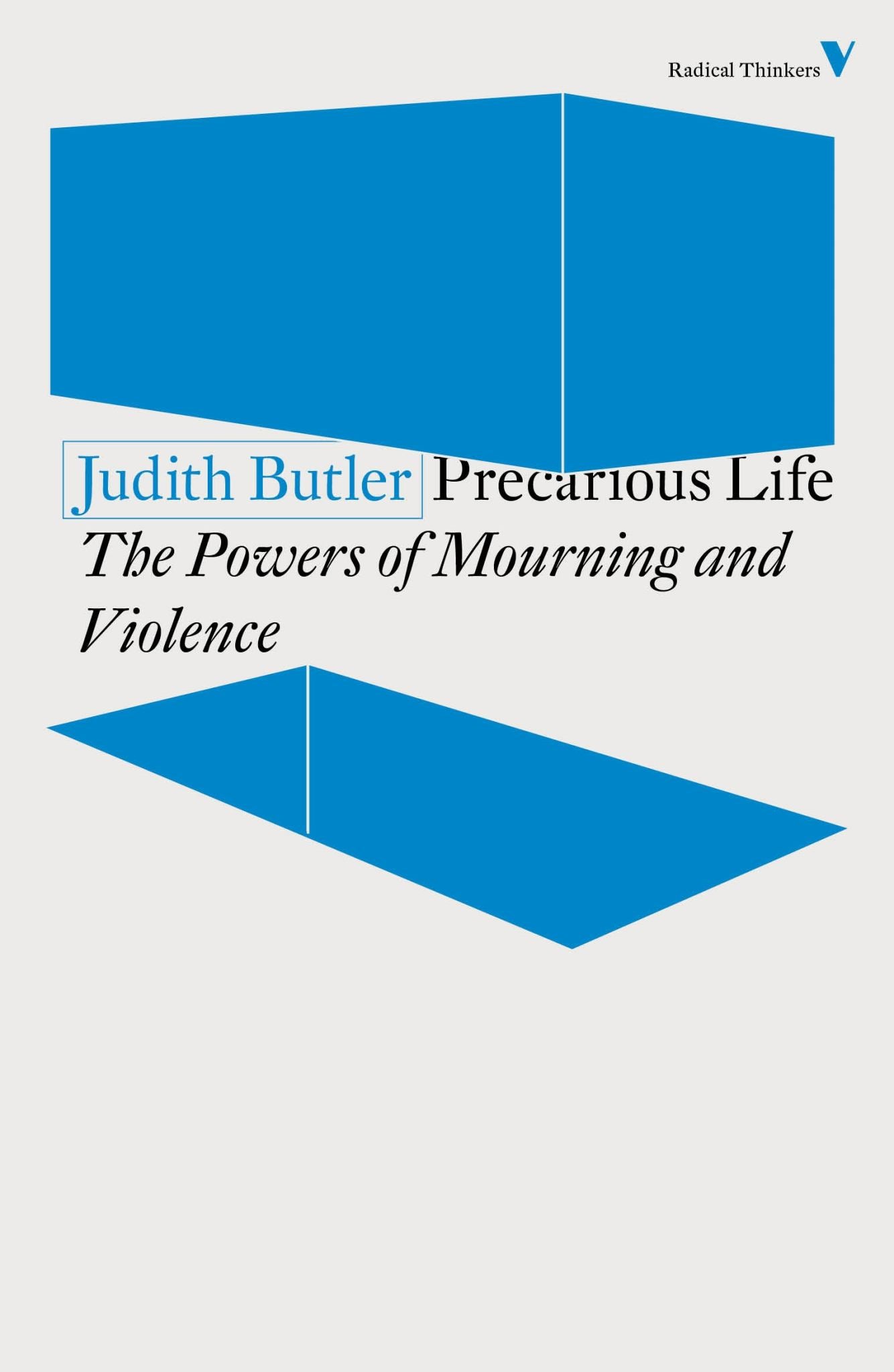
Image with text
Pair text with an image to focus on your chosen product, collection, or blog post. Add details on availability, style, or even provide a review.
-
Free Shipping
Pair text with an image to focus on your chosen product, collection, or blog post. Add details on availability, style, or even provide a review.
-
Hassle-Free Exchanges
Pair text with an image to focus on your chosen product, collection, or blog post. Add details on availability, style, or even provide a review.